Relatable
Students engage with adults who feel human and reachable.
Engagement Coaching & Consulting
Research-backed engagement coaching and consulting for schools, educators, parents and students, from a former principal with 20+ years in education.

20+
Years in Education
Ph.D.
Educational Leadership
Former
School Principal
2026
Featured in Black Love Magazine

Meet Dr. Frankie Bell
Dr. Bell grew up in Auburn, Alabama, and found her footing because educators kept showing up for her.
Two decades as a teacher, principal and coach later, she helps schools and families do the same for the students who are hardest to reach. Her research and her books turn that conviction into tools adults can use every day.
Find Your Path
Pick the description that fits you best.
Build a culture where students show up and stay engaged.
See the servicePractical ways to reach the students hardest to reach.
See the serviceRebuild connection and confidence at home.
See the serviceOne-to-one coaching for students, booked through a parent.
See the serviceThe R.R.E.A.C.H. Framework
Disengagement isn't a personality. It's a signal. RREACH helps adults respond to that signal so students move from disconnected to deliberate: showing up, trying, and belonging.
Students engage with adults who feel human and reachable.
Follow-through is what turns a good moment into trust.
Name the feeling before correcting the behavior.
Students can tell the difference between a script and a person.
Same adult, same standards, same warmth, every day.
Hold a picture of the student's future they cannot yet hold themselves.
Work With Me
Whether she’s speaking at a conference, to school staff, to a room full of parents, or with students of every age, Dr. Bell meets people where they are and leaves them with a plan. Could your event be next?


How It Works
We listen first.
We find where connection is breaking down.
You leave with clear next steps.
Kind words
“Dr. Bell is a consummate instructional leader committed to high standards and the success of all students. She embodies the attributes of a transformational leader. She inspires students and colleagues to achieve unexpected or remarkable results.”
“I was impressed with her ability to lead and empower others, and even more with her extensive knowledge of mathematics and her ability to help children accomplish the impossible. She is an incredible motivator and has a gift for connecting with others.”
“She was a fixture at every school activity. It was not uncommon to see her cheering on the sidelines or running laps around the track with our cheerleaders. She cared about students academically, physically, socially, and emotionally.”
Next live session
Schedule announced soon
Live with Dr. Bell
Join Dr. Bell live for honest conversations on reaching students, leading schools and raising children who choose to win. Get a reminder before each session.
Books
New · Now available
A three-book leadership series for school leaders: one team, one home, every child.

A Leader’s Guide to Building a Unified School Staff
Build trust, recognize strengths and turn individual potential into collective purpose.
View on Amazon
A Leader’s Guide to Building Strong School–Family Partnerships
Reach families where they are, protect their dignity and turn parents into partners.
View on Amazon
A Leader’s Guide to Reaching Every Student
Build a school where every student feels seen, is held to high expectations and can choose to win.
View on Amazon



Free Resources
Pick the guide that fits and we'll send it straight to your inbox.
A simple week of small, steady habits to rebuild connection at home.
A practical checklist for reaching the students who are hardest to reach.
From the Blog

Simple, visible habits that tell every student they were expected.
Read article
What students are really telling us when they check out, and the first adult move that changes it.
Read article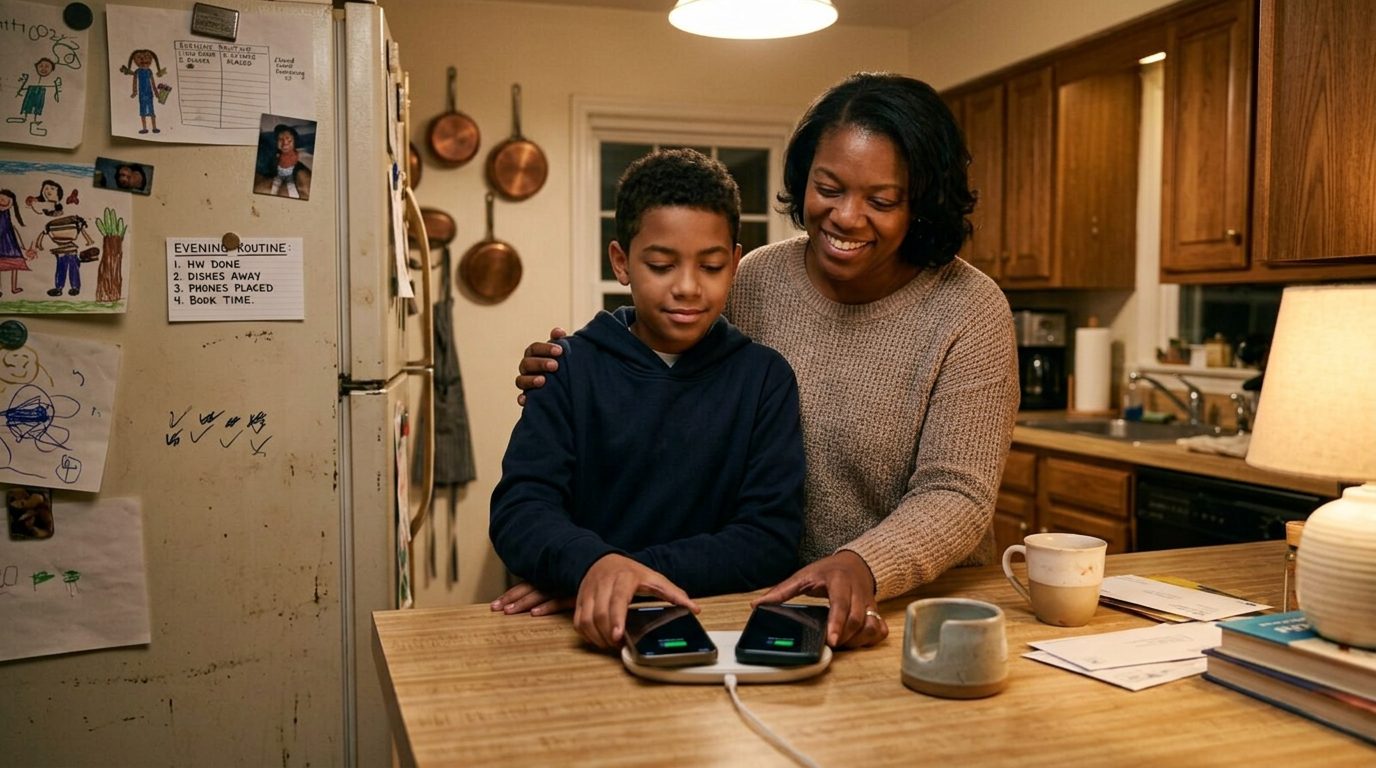
Why small, steady routines rebuild trust faster than big promises.
Read articleGet new articles by email
FAQ
Still unsure? Send a note through the form and choose "Not sure yet".
Yes. Coaching and consultations are available online, and workshops and keynotes can be in person or virtual.
Yes. Your first consultation is free. We'll talk through your goals and recommend the right next step.
Parents, educators and school leaders who want a clear next step.
Use the form below, choose Workshops and Keynote Speaking, and share your event date and audience.
Yes. School and District Consulting is built for leadership teams and multi-school rollouts.
Dr. Bell's team reviews your request and replies by email to schedule your free consultation.
Book a Free Consultation
Book a free consultation, invite Dr. Bell to speak, or send a question.
Dr. Bell will review it and reply by email.
About Dr. Bell
Educator, principal, researcher, author and coach from Auburn, Alabama.
Her Story
Frankie Bell began life in Auburn, Alabama, in a tiny house with no indoor bathroom. Money was scarce and moves between relatives' homes were frequent, but teachers kept showing up for her, and she learned early that one committed adult can change a child's path.
In 2010 a serious pedestrian accident left her badly broken and told she would be lucky to walk normally again. The long recovery became her greatest challenge and the foundation of her message: Choose to Win.
“I hope the main thing that people take from this book is to not give up. Life is hard, but if you keep pushing, you'll come out on the side where God wants you to be.”— Dr. Frankie Bell
She went on to earn her doctorate, lead W.F. Burns Middle School in Valley, Alabama, as principal, and now coaches and consults with schools, educators and families.

Helping Hand Award, The Reed Foundation. Presented to Dr. Bell for outstanding service and dedication to the community.
Milestones
2004
B.S., Mathematics EducationAuburn University Montgomery
2008
Master's in EducationTroy University
2010
The accidentand the long recovery
2014
Ph.D., Educational Leadership and FoundationsAuburn University
2019
PublishesChoose to Win
2021
PublishesLeaders Shift
2026
Featured inBlack Love Magazine
Education and Career
A personal word to parents.
“You do not have to be perfect to be powerful in your child's life.”
Her Work
Test Prep
Assessment resources from a former math teacher, principal and college mathematics professor, built to help students prepare with confidence.

Choose 2 Win ACT Math
Focused ACT math practice for high school students, designed by Dr. Bell to build skills and test-day confidence.
Join the waiting list and we’ll email you the link the day it’s live on Amazon.

What parents say
+7 points
“Dr. Frankie Bell delivered exceptional results by helping my youngest daughter increase her ACT Math score by an impressive 7 points after just two virtual sessions! Her ability to identify areas for improvement, provide targeted instruction, and build confidence in such a short amount of time is truly remarkable!”
18 → 21
“Thank you for helping my daughter improve her ACT score from an 18 to a 21! She told me that your teaching techniques were flawless and that you helped her learn how to breathe, relax, and concentrate during the test. I have also heard other parents bragging about how their children’s ACT scores improved after taking your class.”
Coming soon
Middle school practice for the Georgia Milestones, including the calculator strategies students can use on test day.
The Blog
Practical writing for educators, school leaders and parents from Dr. Frankie Bell.
Simple, visible habits that tell every student they were expected.
Read articleWhat students are really telling us when they check out, and the first adult move that changes it.
Read articleWhy small, steady routines rebuild trust faster than big promises.
Read article
The small promises adults keep matter more to students than the big speeches.
Read article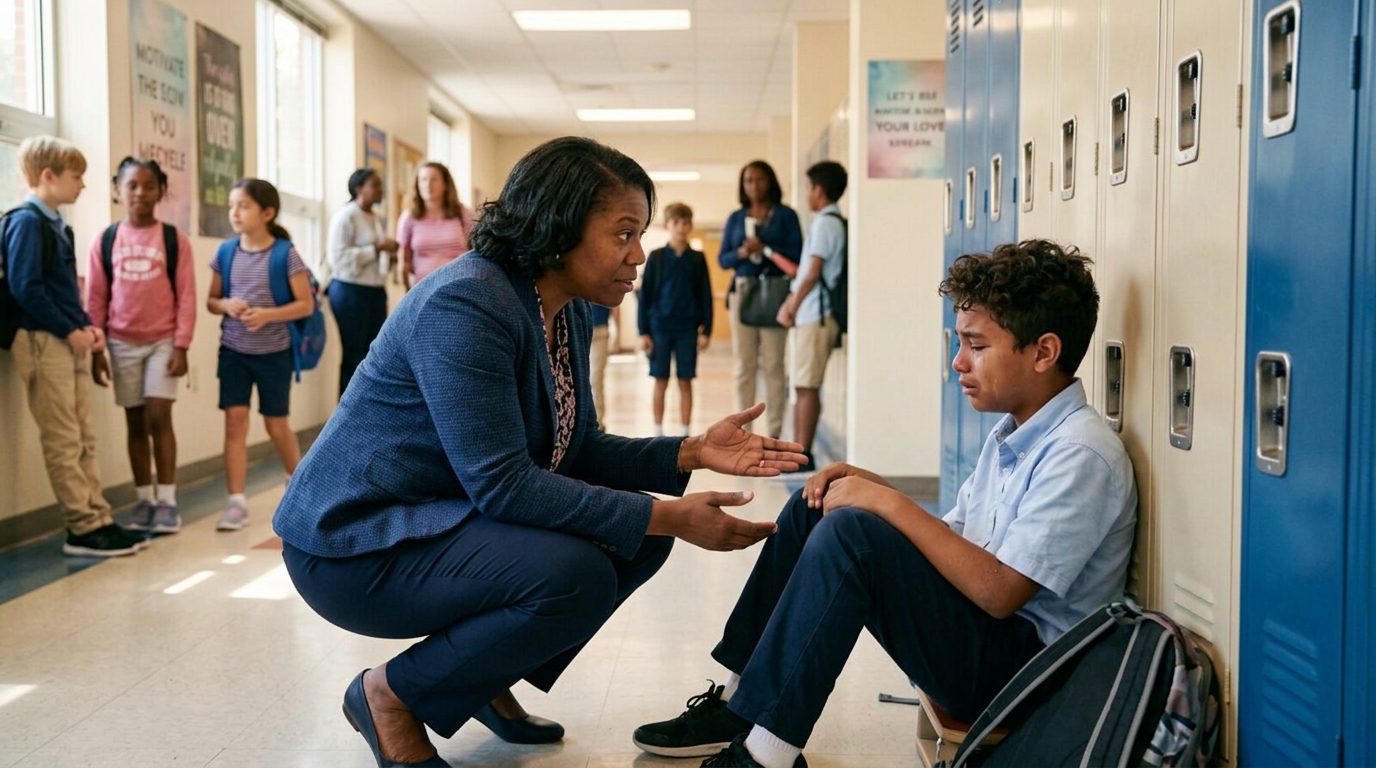
A simple empathy move that de-escalates and reconnects.
Read article
How to respond to apathy without a power struggle.
Read articleGet new articles by email
Leadership
Simple, visible habits that tell every student they were expected.
Every student walks into school asking one silent question: Did anybody expect me today? The first ten minutes answer it before a single bell rings or a single lesson starts.
When I was a principal, I learned that my most important meeting of the day was not on my calendar. It happened at the door, in the hallway, and in the cafeteria line. Students do not remember our memos. They remember whether we saw them.
There is a difference between a student who is tolerated and a student who is expected. A tolerated student is processed. An expected student is welcomed, named, and noticed. You cannot fake that difference, and kids can feel it from across the parking lot.
Here is the good news. You do not need a new program, a grant, or a committee to change how your mornings feel. You need a few simple, visible habits, done on purpose, every single day.
Arriving early is not about supervision. It is a message. When the principal is already standing there, students learn that the day was ready for them, not the other way around. Pick your post where the most students enter, and guard that time like a meeting with your superintendent.
“Good morning” is nice. “Good morning, Jaylen” is powerful. A name tells a child, I know who you are, and you matter here. If you don’t know a name yet, ask, then use it again tomorrow. Make it a goal to learn five new names every week.
The front door is your first data point of the day. Watch for the child with head down, the one who came without a jacket, the one who usually talks and didn’t. You are not just checking uniforms. You are taking the emotional temperature of your building. Jot a quick note and follow up before lunch.
If the first words a student hears from you are “Tuck in your shirt” or “Get off the phone,” you have started their day in debt. Lead with a greeting, a high-five, or a compliment. Save the redirection for second. Relationships first, rules second. The rules will land better because of it.
Your voice over the intercom is the one every student hears at the same time. Do not waste it on reading a list. Share one win, one shout-out, and one word of encouragement. End with your school’s call to action, the same way every day. Consistency builds identity. Students should be able to finish your sentence with you.
Once the doors close, do not disappear into your office. Take a quick lap. Pop your head into classrooms. Smile at the late student instead of sighing. Ten seconds of presence in a hallway tells everyone that you are not managing the school from behind a desk. You are leading it from the middle.
Before the clock hits ten minutes, choose one student to check on personally. Maybe it is the child from habit three. Maybe it is the one who just transferred in. A short, private “I’m glad you’re here” can carry a child through a hard day. Some of our students are walking in with pain we will never fully see.
Pick two of these habits and do them every morning for five days. Not perfectly, just consistently. Then notice what changes: in the hallway, in the front office, and in you.
Leaders, the first ten minutes are not a duty. They are a decision. Every morning you get to choose whether students feel processed or expected. Choose expected. Choose presence. Choose to win the morning, and you will be surprised how often the rest of the day follows.
Pain is inevitable. Winning is optional. Choose to Win.
#Choose2WIN
Dr. Frankie Bell is an instructional mathematics coach, college mathematics professor, former school principal, author, speaker, and growth mindset presenter. She is the author of Choose to Win and The Choose 2 WIN Blueprint series for school leaders.
Get new articles by email
Engagement
What students are really telling us when they check out, and the first adult move that changes it.
Every educator knows the look. The hood goes up. The head goes down. The pencil never comes out. The student who used to raise a hand now answers every question with a shrug.
In that moment, it is easy to reach for a label: lazy, unmotivated, defiant, “just not a school kid.” Those labels feel like explanations. But they are really conclusions, and they close the door on the one question that could change the outcome: What is this student trying to tell me?
The central idea of From Disconnected to Deliberate is simple: disengagement is not a personality trait. It is a process, shaped by what students experience every day.
Students rarely disconnect all at once. They pull back a little at a time. It starts with a missed assignment, then a quiet seat in the back, then a few absences, then a referral. By the time adults notice, the student has often been withdrawing for weeks or months.
That matters because a trait is fixed, but a process can be interrupted. If disengagement is something that happens to students in response to their environment, then the environment, including the adults in it, can help reverse it.
When a student checks out, the behavior is a message. Students don’t always have the words, or the trust, to say what they need. So they say it with silence, distance, and avoidance. Behind most disengagement are a few quiet questions:
None of these questions shows up on a referral form. But each one points to a relationship and an environment adults can influence. That is the shift: from asking “What’s wrong with this student?” to asking “What has this student been experiencing?”
If disengagement is a signal, the first response shouldn’t be a consequence. It should be connection. In the R.R.E.A.C.H. framework, this begins with being Relatable: connection before correction.
Connection before correction does not mean lowering expectations. It means a student is more likely to meet a high standard when it comes from an adult they trust. In practice, it looks like this:
That first move matters, but it can’t stand alone. The rest of R.R.E.A.C.H. keeps the connection going: being Reliable, Empathetic, Authentic, Consistent, and Hopeful. A single kind conversation can open the door. Showing up the same way day after day is what keeps it open.
Students don’t need perfect adults. They need deliberate ones: adults who notice the signal, respond with connection, and stay consistent long enough for trust to grow. When that happens, engagement is no longer something we chase. It becomes something students choose.
Reflect this week:
Dr. Frankie Bell is an educational leader, former principal, and researcher with more than 22 years of experience in education. Her book From Disconnected to Deliberate: The R.R.E.A.C.H. Response to Student Engagement gives teachers, principals, and school leaders a practical path to classrooms where every student feels seen, supported, and willing to try again. To learn more, or to bring Dr. Bell to your school for professional development, contact her today. This book, and the professional development that brings it to life, will change your school.
Get new articles by email
Parenting
Why small, steady routines rebuild trust faster than big promises.
Most parents have made the big promise. “Starting Monday, no more yelling.” “This summer, we’re getting organized.” “From now on, phones go away at ten.” We mean it when we say it. Then Wednesday comes, someone is tired, dinner is late, and the plan falls apart.
When that happens, many of us decide we failed and quietly give up. But children aren’t waiting for a perfect parent. They are watching for a predictable one.
Perfection sets a standard no family can keep. When we miss it, we swing between two extremes: letting things slide because we’re exhausted, then cracking down hard to make up for it.
Consider a familiar scene. Phones are supposed to be put away at 10:00 p.m. Some nights the rule is ignored because the parent is tired. Another night, the parent suddenly takes the phone for a week.
From the child’s side, the rule isn’t really about the clock. It’s about the parent’s mood. And when the rule changes with our mood, children learn to test the boundary to find out which version of us they’ll get tonight. Inconsistency, not imperfection, is what erodes trust.
After years of working with students, families, and schools, Dr. Bell comes back to one truth: follow-through builds trust. Children feel safe when three things stay the same.
None of this requires perfection. It requires repetition. As Dr. Bell puts it, small repeated actions shape strong families.
You don’t need a new system. You need one routine simple enough to survive a hard day.
Pick one routine. A morning launch, a homework start time, a phone-charging spot, a bedtime wind-down, or a weekly family reset. Then build it with five questions:
Write it as one sentence: “This week, our family will practice ______ at ______. I will check it by ______, and if we miss it, we will reset by ______.”
Pause before you correct. When a hard moment hits, try PAUSE: Pause your mouth, Assess the issue, Understand your trigger, Settle your body, and Engage with the goal in mind. Calm does not mean passive. You can be calm and still mean what you said.
Repair when you miss. Every parent gets it wrong sometimes. Repair sounds like: “I handled that wrong. I’m sorry. Next time I’ll pause first. And the expectation still stands.” Repair builds credibility, and accountability strengthens authority.
When the week goes sideways, and it will, don’t abandon the routine. Return to it.
Your children don’t need you to get it right every time. They need to know what to expect from you: the same expectation, the same consequence, and the same love, day after day. Mean what you say. Say what you mean. Follow through in love.
Reflect this week:
Pick one tool and practice it this week. Not perfectly, but consistently.
Dr. Frankie Bell is an educational leader, former principal, author, and speaker with more than 22 years of experience helping students, families, and schools grow. To learn more, or to bring Dr. Bell to your school, church, or parent group for a workshop on consistency at home, contact her today. These tools will change the way your families connect.
Get new articles by email
Leadership
The small promises adults keep matter more to students than the big speeches.
Every school has its remarkable moments: the powerful assembly, the inspiring first-day speech, the poster that says “We believe in you.” Those moments have their place. But students don’t build trust in a single moment. They build it by watching what happens next.
Did the teacher who said “Come see me after class” actually make time? Did the coach who promised a fair shot keep his word? Did the principal who said “My door is always open” look up when a student knocked? Students remember the answers to those questions long after they’ve forgotten the speech.
In From Disconnected to Deliberate, Dr. Frankie Bell describes disengagement as a process, not a personality trait. Students pull back a little at a time, often after adults have let them down in small ways they never mention.
For many students, broken promises aren’t new. Adults have come and gone. Plans have changed without warning. Encouragement has been offered and then forgotten. So students learn to wait and see. They hold back their effort until they know whether an adult will still be there next week.
That is why reliability matters more than charisma. A remarkable adult can inspire a student for a day. A reliable adult gives that student a reason to keep showing up.
The book’s R.R.E.A.C.H. framework names six practices that build relational trust: Relatable, Reliable, Empathetic, Authentic, Consistent, and Hopeful. The first two work as a pair. Students need adults they can approach (Relatable) and adults they can depend on (Reliable).
Being relatable opens the door. Being reliable keeps it open. A warm conversation means little if the follow-up never comes. Dr. Bell saw this firsthand in BICS (Building Individual Capacity for Success), her mentoring work with ninth graders making the transition to high school. When the adults around students changed, students felt it. What helped them stay connected was adults who kept showing up, year after year. Reported changes during that work included better attendance, fewer referrals, stronger grades, and a greater sense of belonging, and consistent adults were at the center of it.
Reliability isn’t built with grand gestures. It’s built with ordinary promises, kept on ordinary days.
None of these moves will make headlines. That’s the point. Trust grows in the small moments students are quietly watching.
Students don’t need adults who are remarkable once in a while. They need adults who are reliable every day. When students can predict that you’ll follow through, they stop waiting to see and start showing up. That is how a disconnected student becomes an engaged one: one kept promise at a time.
Reflect this week:
Dr. Frankie Bell is an educational leader, former principal, and researcher with more than 22 years of experience in education, and the author of From Disconnected to Deliberate: The R.R.E.A.C.H. Response to Student Engagement. To learn more, or to bring Dr. Bell to your school for professional development, contact her today. This book, and the professional development that brings it to life, will change your school.
Get new articles by email
Engagement
A simple empathy move that de-escalates and reconnects.
A student slams a book on the desk. A child yells, “This is stupid!” and storms off. In that moment, every instinct says to correct the behavior right now: “Don’t talk to me like that.” “Pick that up.” “That’s a referral.”
Sometimes that works. More often, it turns a hard moment into a standoff. The young person digs in, the adult raises their voice, and everyone loses. There is a better first move, and it takes about five seconds: name the feeling before you correct the behavior.
Behavior is usually the loudest part of a feeling. Frustration comes out as attitude. Embarrassment comes out as defiance. Hurt comes out as “I don’t care.” When we only respond to the behavior, we’re arguing with the symptom and ignoring the cause.
Naming the feeling does three things at once. It tells the young person I see you. It lowers the temperature, because it’s hard to keep fighting someone who understands you. And it opens the door for the correction that still needs to happen.
This is the Empathetic practice in the R.R.E.A.C.H. framework from From Disconnected to Deliberate. Empathy doesn’t excuse the behavior or lower the standard. It simply puts connection first, so correction can actually land. As Dr. Bell teaches: correct the behavior, protect the identity.
Try these phrases:
Naming the feeling isn’t soft. It’s strategic. It turns a power struggle into a conversation and gives young people what they need most in a hard moment: an adult who stays calm, sees them clearly, and still holds the line.
Reflect this week:
Dr. Frankie Bell is an educational leader, former principal, and researcher with more than 22 years of experience in education, and the author of From Disconnected to Deliberate: The R.R.E.A.C.H. Response to Student Engagement. To learn more, or to bring Dr. Bell to your school for professional development, contact her today. This book, and the professional development that brings it to life, will change your school.
Get new articles by email
Parenting
How to respond to apathy without a power struggle.
“Your grades are slipping.” “I don’t care.” “You’re going to lose your phone.” “I don’t care.”
Few phrases push a parent’s buttons faster. It feels like disrespect, and the natural response is to raise the stakes until they do care. Bigger threats. Longer lectures. Louder voices. But that rarely works. It usually turns into a power struggle that nobody wins, and the child walks away more convinced that caring isn’t worth it.
“I don’t care” is rarely the truth. More often, it’s a shield. Behind it is usually one of these:
Like disengagement at school, apathy at home is a signal, not a personality. The goal isn’t to win the argument. It’s to find out what the shield is protecting.
Try saying:
When your child says “I don’t care,” they’re often testing whether you still do. You don’t have to win the moment. You just have to stay calm, stay curious, and stay consistent. Over time, that steady presence is what helps a child start caring again.
Reflect this week:
Dr. Frankie Bell is an educational leader, former principal, author, and speaker with more than 22 years of experience helping students, families, and schools grow. To learn more, or to bring Dr. Bell to your school, church, or parent group for a workshop, contact her today. These tools will change the way your families connect.
Get new articles by email
Win the Team · Chapter 1
Your staff experiences who you are long before they buy into what you say.
When I moved in with my father’s mother, Mrs. Georgia Lee Thomas, as a young child, I didn’t understand what that season would mean for my life. I could not see how her home, her expectations, and her wisdom would shape the woman I would become.
We called her MayDear, a Southern term of endearment for a grandmother. Looking back, I don’t believe I ended up in her care by chance. God was using her to teach me discipline long before I understood how much my future would require it.
My grandmother was strict. At that age, I felt the weight of her expectations more than I understood the wisdom behind them. Today I can see what she was doing: she was teaching me to direct what was already inside me.
And plenty inside me needed direction.
Every Friday night, we held what we called prayer meetings with children from the community. I wanted to participate, but simply being present never felt like enough. Unless I was leading the singing—what many churches today would call praise and worship—I did not feel I had added anything.
Singing was my talent. Leading was my instinct. And I was bold.
Even as a child, I wanted to step forward, use my voice, and help lead what was happening. I did not yet understand that this desire might be connected to a calling. I only knew that when an opportunity to lead appeared, something in me answered.
But boldness needs direction to be useful. A strong voice needs judgment. Talent needs discipline. The desire to lead requires learning to listen, accept correction, and take ownership. My grandmother was preparing me to lead long before I understood what leadership would ask of me.
What I understand most clearly now is that, even in her strictness, my grandmother kept showing me the best of myself. She could correct me and still see my potential. Her expectations left room for the person I could become.
I did not always appreciate that as a child. Growth is uncomfortable when someone sees possibilities in you that you have not yet learned to see in yourself. I lived under her expectations; she prepared me for responsibilities I could not yet imagine.
Her wisdom was in how she held those things together: discipline and possibility, correction and belief.
Sometimes another person recognizes our strength before we have the confidence or experience to name it. Their belief gives us a starting point. Their guidance helps us begin gathering evidence that we are capable.
I see my grandmother’s influence in my own leadership. One of my strengths is helping people see a stronger version of themselves—abilities they have overlooked, strengths they have minimized, possibilities they have been afraid to pursue.
As a school leader, I carry that belief into my work with adults. I want every staff member to recognize the strengths they bring and feel confident enough to develop them. That requires me to pay attention to what they contribute—and to consider honestly how my own behavior affects their willingness to grow.
You cannot win a staff until you know who is leading it. Your staff experiences far more than your knowledge. They experience your reactions, your assumptions, your confidence, and your insecurities—often before they ever hear your vision.
Knowing yourself means understanding what you value, what drives you, what unsettles you, and how you behave when you feel challenged. It means recognizing your strengths and how those same strengths become obstacles when you don’t manage them.
My boldness helps me address difficult situations. It can also take up too much space if I do not pause to hear someone else. My commitment to discipline helps me set clear expectations. It also obligates me to ask whether people have the understanding, resources, and support to meet them.
Even my desire to help people see their potential requires reflection:
Those questions keep my leadership honest.
Self-awareness asks me to examine how people experience my pace, my tone, and my attention. My intentions matter. So does whether a teacher, a paraprofessional, or a custodian feels free to question, contribute, or ask for clarification.
I recognize another lesson from those Friday night prayer meetings.
As a child, I connected my contribution to being in charge. If I was leading the singing, I had added something. That instinct revealed my desire to lead, but it also gives me something to examine as an adult:
A leader must also learn to contribute when someone else is leading.
Knowing who I am means recognizing both the strength of that early instinct and the growth it demands. My willingness to step forward can serve a team well. It must be matched by a willingness to step back, listen, and make room for someone else’s ability.
When I am secure in what I bring, I can appreciate another person’s strength without experiencing it as a threat to my own. I can support their idea, learn from their expertise, and celebrate their success even when I was not the one leading the work.
Knowing who I am helps me stop asking my staff to prove my worth—and start helping them recognize their own.
A leader’s self-awareness shows up in the culture they create.
When I recognize that I am frustrated, I can pause before speaking in a way that discourages someone. When I understand why a disagreement feels personal, I can examine the concern on its merits. When I know the limits of my own knowledge, I can ask for help and invite others’ expertise.
These choices make me more dependable. I want people to know what to expect from me and to feel safe raising a question or a concern.
Self-awareness also allows me to model accountability. I can acknowledge when my directions were unclear. I can explain why I changed a decision. I can apologize when my delivery caused harm—and then change the behavior that made the apology necessary. When a staff watches its leader own a mistake, it learns that owning mistakes is safe.
We all bring our upbringing into our leadership. We bring what we learned about authority, discipline, praise, correction, and belonging. Those lessons shape how we respond when someone questions us, makes a mistake, or approaches the work differently than we would.
My grandmother’s strictness taught me to value discipline. As a leader, I express that value through clear expectations, fairness, and dependable follow-through. My boldness gives me the courage to act. I pair it with listening and sound judgment.
The culture I want to build has room for clear expectations, honest questions, useful feedback, genuine appreciation, and continued growth. My contribution to that culture begins with how well I manage myself.
When I walk into a room, I bring Frankie with me. I bring my voice, my determination, my faith, and the lessons that shaped me. I bring the little girl who wanted to be heard and the woman who now has a responsibility to hear others.
I know I can be intense. I talk fast, think ahead, and see possibilities I want to pursue right away. When I believe in something—or someone—I put real energy behind that belief. But I must ask whether the people beside me have had time to understand the direction and contribute their own ideas.
Being Dr. Bell means owning that experience. I need to recognize when my energy encourages someone and when my pace leaves them struggling to keep up. I need to listen when someone tells me my delivery made it hard to receive what I was saying. Knowing myself means staying open to what others help me discover.
My grandmother helped me understand that what I carried had value and needed direction. Today, that work is mine to continue. I can use my voice to advocate, my determination to follow through, and my confidence to make room for someone else to step forward.
I want my staff to experience the care behind my expectations and the belief behind my push. That requires me to keep asking whether my actions help them contribute—and to adjust when they do not.
Knowing myself gives me a foundation. The next step is putting that understanding into service.
I know how to step into a room. My responsibility is to consider what becomes possible for others because I am there.
WIN THE TEAM
Who saw potential in you before you recognized it? What did that person do to help you develop it?
What lesson did you resist when you were younger that you understand differently today? How does it influence your leadership?
Consider your pace, tone, intensity, and availability. Where might your intentions differ from the experience others have with you?
How do you contribute when someone else is leading? What does your response reveal about your confidence and your need for control?
Begin with yourself. Choose one leadership habit to examine this week. It might be speaking too quickly, interrupting, dividing your attention, or moving past someone’s contribution without acknowledging it. Identify one adjustment you will practice.
Then ask a trusted colleague: “What is one thing I do that helps you contribute, and one thing I could adjust?” Listen, thank them, and choose an adjustment to practice. At the end of the week, reflect on what you learned about yourself—and on how you responded to the feedback.
In a faculty meeting or leadership team session, ask each person to complete this sentence on an index card: “When I walk into a room, I bring ________.” Go first, and be honest about one strength and one way that strength can get in the way.
Have people share in pairs, then discuss as a group: How do the strengths in this room complement one another? Where might our strengths create blind spots for our team? Collect the cards. They are a portrait of what your staff believes it brings—and a starting point for helping them see even more.
Win the Parents · Chapter 1
Every parent can tell when they are not wanted.
I was seventeen years old and still in high school when I went into labor early, right there at school. My baby was not due for almost three weeks. My school counselor drove me to the hospital, and I went through the emergency room doors young, scared, and needing someone to treat me with care.
The doctor on duty that day was rude to me. My daughter’s father was not with me. He was at work. But the doctor looked at a seventeen-year-old girl standing there alone and decided he already knew my story. He made it clear that he expected me to have a hard road ahead, with little or no support. In his mind, my child did not have a father.
He never asked. He just assumed.
To make matters worse, I knew him, but he did not know me. I went to school with his son. I was the same age as his child, sitting in the same classrooms and walking the same halls. If he had seen me as one of his son’s classmates, I wonder whether he would have spoken to me the same way. But he did not see a classmate. He saw a statistic.
I want you to understand what that does to a scared teenager. I was already afraid I was not good enough. I was already wondering whether I could really do this. His words did not tell me anything I needed to know. They only confirmed my worst fears about myself.
When an adult in charge looks at a young mother that way, she hears things no one actually said out loud:
And she learns to protect herself. She stops asking questions, because questions make her look like she does not know what she is doing. She stops telling the truth about what she needs, because the truth might be used against her. She walks into the next office, the next appointment, and the next school building with her guard already up.
He was just the doctor who happened to be on duty in the emergency room the day I went into labor. But the way he made me feel followed me for years.
Twelve years later, I was a married woman with a physician of my own. I told my physician I had only one request. If my own doctor could not be there, I did not want the doctor I had seen as a young mother. I still remembered how he had made me feel.
As life would have it, my physician was not available, and he was the one on call.
I braced myself. But I could hardly believe it was the same man. This time, my husband was standing beside me, and the doctor did not have to guess whether my child had a father. The doctor was polite. He was patient. He explained things. He looked me in the eye. He treated me like someone who mattered.
I was the same woman. I had the same heart, the same mind, the same love for my children. The only things that had changed were my age, the ring on my finger, and the man standing next to me. He had not changed his opinion of me because he finally knew me. He changed it because I finally fit the picture he respected.
That moment shaped the way I see every parent who walks into a school.
A school is not a hospital. But the front office, the conference table, and the car line can work the same way that hospital did. Before a parent ever opens their mouth, someone may have already decided who they are. A mother comes to the conference alone, and someone assumes there is no father at home. In truth, he may simply be at work.
Think about the parents who walk into our buildings every day:
Every one of them can feel how they are received. Most of them will not say a word about it. They will simply stop coming.
Not everyone treated me that way when I was young. When I was pregnant in high school, my principal, Mr. Robert Dotson, allowed me to work in the front office as a summer job. He must have known I was pregnant, but he never said a word about it or made me feel anything but welcome. Same girl. Same circumstances. A different adult made a different choice.
That is the point of this chapter. Assumptions are not facts. They are choices. And a leader can choose differently, and build a school that does too.
Researcher Gill Crozier interviewed parents about their relationships with their children’s teachers. The title of her study came from the parents themselves: “We know when we’re not wanted.”1 Many of the parents she spoke with, especially working-class parents, saw teachers as the experts and themselves as outsiders. They believed the school did not really want their input, and they kept their distance. The relationship ran one way: the school talked, and the parents listened.
Margaret Finders and Cynthia Lewis heard the same thing when they talked with parents who rarely came to school.2 Schools often assumed those parents did not care. The parents told a different story: bad memories of their own school days, jobs that would not let them leave, language barriers, and the feeling of being judged. One father said the school “wanted me gone.” One mother said, “They never ask me what I think. They never ask me anything.”
The lesson is plain. When parents stay away, we cannot assume it is because they do not care. Often, it is because they believe we do not want them there.
The ideas and quotations in these studies belong to their authors and the parents they interviewed. The stories and leadership applications in this chapter are my own.
I walk into schools today in two very different ways.
Sometimes I walk in as Dr. Bell. I have a Ph.D. in Educational Leadership. I have been a teacher, an assistant principal, and a principal. I know the policies, the language, and the people. When I walk in as Dr. Bell, doors open.
Other times, I walk in as Grandma. And when a school does not know who I am, I can feel the difference. Some people assume. They decide who I am by how I look, who I came with, or whose name is on the file.
Being a grandmother has taught me to see things differently than being Dr. Bell ever did.
I have stood beside my son as he fought to be treated as a parent at his own child’s school. I knew what questions to ask. I knew what the law said. I knew how to put it in writing. And I often wonder to myself: What if I didn’t know my rights? What if I didn’t know how to fight for my son’s rights?
So many families do not know. They accept the first answer they are given because they do not know there is another one.
And I will say this plainly: all fathers are not deadbeats. Many fathers show up, sign the papers, ask the questions, and love their children fiercely. But even a father who shows up can be made to feel insignificant. He can be talked past, sent away, or treated as a problem to manage instead of a parent to welcome. When that happens, the school does not just lose a father. A child loses a partner in their education.
A school that only respects the parents who fit its picture will never win the families who need it most.
A leader cannot control every assumption every adult in the building carries. But a leader can decide what the school will stand for, and then build the habits that protect it.
Assumptions lose their power when they are spoken. Ask your staff, honestly and without blame: What do we assume about young parents? Single parents? Working parents? Grandparents? Fathers? Write the answers down. Then ask, “Where did that come from, and is it true?”
Ask yourself: What assumption about families have I carried that I have never examined?
The first thirty seconds at the front desk tell a family whether they belong. Train every adult who answers the phone or the door to greet each visitor with the same warmth, whatever they look like and whoever they came with. A parent should never have to prove they deserve respect.
Ask yourself: Would every family get the same greeting I would get if I walked in unannounced?
Sometimes the assumption is built into the paperwork. Look at your forms, your contact lists, and your communication systems. Is there room for two households? For grandparents raising children? For a father who lives across town?
Under federal law, both parents generally have the right to see their child’s education records, unless the school has been given a court order or other legal document that specifically takes that right away.3 A school that only calls one parent, or only lets one parent into the portal, may be shutting out a parent who has every right to be there.
Ask yourself: Do our systems make room for every kind of family we serve?
When a parent misses a meeting, do not decide what it means. Call. Ask what time would work. Offer a phone call, a video call, or an early morning before work. Most of the time, the reason is not that they do not care. It is that no one asked what they needed.
Ask yourself: When a parent does not show up, what is my first thought, and is it fair?
Do not make families fight for what is already theirs. Put parents’ rights in plain language, in the languages your families speak, where they can find them: on the website, in the handbook, and at the front desk. Train your office staff so they can answer questions correctly the first time.
Ask yourself: If a parent did not know their rights, would they find out from us?
That doctor taught me something I carried into every school I ever led. The way we treat people often has less to do with who they are and more to do with who we think they are.
Parents notice. Young mothers notice. Single mothers notice. Grandparents notice. Fathers notice. And children notice how their parents are treated.
Winning parents starts here, before the phone calls, the open houses, and the family nights. It starts with a leader who is willing to see the parent, not the assumption.
Every parent deserves to be treated the way you would want your own mother treated at the front desk.
As a parent: I was the same mother at seventeen as I was years later as a married woman. Only the way people treated me changed.
As a leader: The most important family-engagement policy in any school is how the adults talk about families when the families are not in the room.
As a grandmother: When I walk in as Grandma instead of Dr. Bell, I learn what the school is really like.
WIN THE PARENTS
Think about the families in your school. Which parents get the warmest welcome, and which ones get the coolest? What does that tell you?
Recall a time someone treated you differently because of your age, your marital status, your job, or how you looked. How did it shape the way you trusted them?
If every adult in your building greeted every family the way they greet the parents they already know, what would be different by the end of the year?
This week, stand near your front office during arrival or dismissal for twenty minutes. Watch how each family is greeted. Notice who gets a smile and a name, and who gets a clipboard and a question. Write down what you see, and share it with your office staff as a learning moment, not a reprimand.
With your leadership team or front office staff, complete an Assumption Audit. For each kind of family below, write one assumption your school may carry, what might really be true, and one change you will make. Review it again in thirty days.
| Family | The assumption we may carry | What we will change |
|---|---|---|
| Young parents | ||
| Single parents | ||
| Working parents | ||
| Grandparents raising children | ||
| Fathers |
1 Gill Crozier, “Is It a Case of ‘We Know When We’re Not Wanted’? The Parents’ Perspective on Parent–Teacher Roles and Relationships,” Educational Research 41, no. 3 (1999): 315–328.
2 Margaret Finders and Cynthia Lewis, “Why Some Parents Don’t Come to School,” Educational Leadership 51, no. 8 (1994).
3 Family Educational Rights and Privacy Act (FERPA), 20 U.S.C. § 1232g; 34 C.F.R. § 99.4. Families should confirm how their state and district apply the law.
Win the Kids · Chapter 1
Every behavior is telling you something. A leader listens.
When I was a little girl, people in my neighborhood knew my sister and me as Punkin and Dee Dee. Dee Dee was the sweet, quiet one. I was the one who always had something to say.
Even before I started school, I had a reputation. If an adult laid down a rule, I wanted to know why. If the reason did not satisfy me, I was ready to negotiate. I stood my ground, argued my case, and made sure every grown-up within earshot heard my side. I was a little lawyer in pigtails, and I did not lose many cases without a fight. In first grade, I even got in trouble for writing “This is Frankie’s bathroom” on the wall of the girls’ restroom. I was never shy about claiming my territory.
My grades were excellent. My conduct was another story. In my early years, many of my report cards came home with top marks in every subject and a note that my conduct needed to improve. Teachers liked me once they got used to my bossy, outspoken ways, but I am sure many of them saw a sassy little girl who had not been taught to respect authority.
That was not the whole story.
My sister and I were raised largely by our great-grandmother, Mrs. Julia Mae Thomas, whom we called Grandma, in a little house with an outhouse in the backyard. When I was seven, that house burned to the ground. My sister and I were split up, and I went to live with my father’s mother, whom we called MayDear, a Southern term of endearment for a grandmother. If you read Win the Team, you have already met her.
I changed schools. For the first time in my life, my sister and I were living in different homes. She was in the trailer park right next to mine, close enough to see, but it was not the same as having her under the same roof. I missed her every single day.
All of that change had to go somewhere, and for me, it showed up in my behavior. Missing my sister, a new school, and a new home made me even louder and more defiant than before. One day, I was facing a paddling for something I had done. Instead of taking my punishment, I walked out of school. I just walked out. The principal came and got me, and I never did get that paddling. I got a one-day suspension instead. And when MayDear found out, she made me stand in her kitchen holding two cans of tomato sauce until my little arms gave out. I never got suspended again.
But here is what I want you to understand. My quick tongue was not defiance for the sake of defiance. It was a survival skill. I felt I had to be tough to get by. No one was going to push me around before they first heard my side. And underneath all of that noise was something much simpler. I wanted to be heard.
When I was ten, I moved back home and started fifth grade at a new school. My PE teacher that year was Ms. Hicks. She was a no-nonsense kind of woman, and my quick tongue got me on her wrong side more than a few times.
Yet there was something different about her. Like very few adults before her, she seemed to get me. I think she saw the worried little girl underneath the little adult trying so hard to be brave.
One day, Ms. Hicks stopped me and said, “Frankie, you’re too smart to let your mouth cost you your destiny.”
She went on to tell me I had a bright future if I could find a way to channel my energy in the right direction. For the first time, an adult had given me something truly constructive to think about. I knew I talked a lot. I knew I talked back a lot. But here was someone telling me my voice could actually be a good thing, and that I was smart enough to do something with my life.
Now, do not go thinking I changed overnight. I was ten. I still had plenty to say. But something deep inside me started to soften. I was finally seen as something more than a hard-knocks kid, and I did not have to try so hard to make my case.
Ms. Hicks did not excuse my behavior. She corrected it. But she also looked past it, and she named what she saw on the other side.
That is the first lesson for any leader who wants to win children. The student who frustrates you most may be the one who needs you most. A leader who builds a school culture of looking past the behavior gives every child more chances to meet their own Ms. Hicks.
Every behavior is telling us something. The child who talks back may be saying, I need to be heard. The child who shuts down may be saying, I do not feel safe. The child who clowns in class may be saying, I would rather be laughed at than be seen as not smart. The child who walks out of school may be saying, I do not know how to handle what I am feeling, so I am leaving.
That does not mean behavior does not matter. It does. Children need limits, and the adults around them need to hold those limits. But when we only respond to the behavior, we treat the symptom and miss the child.
When I became a teacher, I made a promise to myself. I never tell a child he is bad. I tell him his choice is bad. It is the behavior you want to address, not the person. I learned that from my own struggles. I naturally want to treat students the way I wanted to be treated.
Jason Okonofua, David Paunesku, and Gregory Walton tested whether a teacher’s mindset about discipline could change what happens to students. In their study, middle school math teachers completed a brief online exercise that encouraged an empathic approach: understanding students’ experiences, valuing relationships, and seeing misbehavior as something students could grow out of. Over the following school year, students of those teachers were suspended at half the rate of students whose teachers had not done the exercise, dropping from 9.6 percent to 4.8 percent.1
The teachers did not lower their standards. They changed how they saw the child in front of them. And the children responded.
The research belongs to those authors. The applications that follow are my own.
Before choosing a consequence, ask what the behavior might be getting the child: attention, escape, control, protection, or a way to be heard. The answer will not erase the consequence, but it will shape what happens next.
Ask yourself: When a student acts out in our building, do we ask why before we decide what?
Say it out loud, and teach your staff to say it: “You are not a bad kid. That was a bad choice.” Children who believe they are bad stop trying to be good. Children who believe they made a bad choice can make a better one.
Ask yourself: Do our words correct the behavior, or do they label the child?
A discipline file tells you what a child did. It rarely tells you what the child has lived through. Before you meet with a student who is struggling, find out what has changed: a move, a loss, a new household, a new school.
Ask yourself: For our students with the most referrals, do we know what changed in their lives?
Ms. Hicks did not tell me to stop talking. She told me my voice could take me somewhere if I pointed it in the right direction. The bossy child may be a leader. The arguing child may be an advocate. The class clown may be a performer. Name the strength, then help the child claim it and use it in the right direction.
Ask yourself: What strength is hiding inside the behavior that frustrates us most?
When a student comes back from a consequence, do not just send them back to class. Meet with them. Talk about what happened, what they need, and what a fresh start looks like. A child who returns to a room without repair is waiting to be in trouble again.
Ask yourself: What happens in our building the morning a student returns from a suspension?
Ms. Hicks had no idea how right she was.
That same voice that earned me so many conduct notes is the voice God uses most in my life today. I stand on stages as an inspirational speaker. I preach. I encourage teachers, leaders, parents, and young people who are ready to give up on themselves. People pay me to talk now, and I am still not shy about it. The very thing that got me sent to the principal’s office became the gift that opened doors I never could have imagined.
My mouth did not cost me my destiny. Once someone helped me point it in the right direction, it became part of my destiny.
That is why I repeat Ms. Hicks’s words to students who remind me of me. A leader who looks past the behavior does not ignore it. A leader who looks past the behavior sees the child standing behind it, and sometimes sees the gift hiding inside it, and then helps that child see it, too.
Correct the choice. Never give up on the child.
As a student: I was often told I was a bad kid. I was really a hurting kid with a big voice. That voice is now how I serve.
As a leader: The students with the thickest files often need the most patient adults.
As a mother and grandmother: I want every adult who corrects my children and grandchildren to also tell them what they see in them.
WIN THE KIDS
Think of an adult who saw something good in you when you were not at your best. What did they say or do?
Think of a student who frustrates you. What might that student’s behavior be trying to tell you?
Listen to the way adults in your building talk about students who struggle. Do those words describe choices or label children?
This week, choose one student with frequent discipline referrals. Find out one thing that has changed in that student’s life, and one strength that student has. Share both with the student’s teachers.
With your team, choose three common behaviors in your building. For each one, list what the behavior might be saying and one way adults could respond to the need underneath it.
| Behavior we see | What it might be saying | How we could respond |
|---|---|---|
1 Jason A. Okonofua, David Paunesku, and Gregory M. Walton, “Brief Intervention to Encourage Empathic Discipline Cuts Suspension Rates in Half among Adolescents,” Proceedings of the National Academy of Sciences 113, no. 19 (2016): 5221–5226.
